
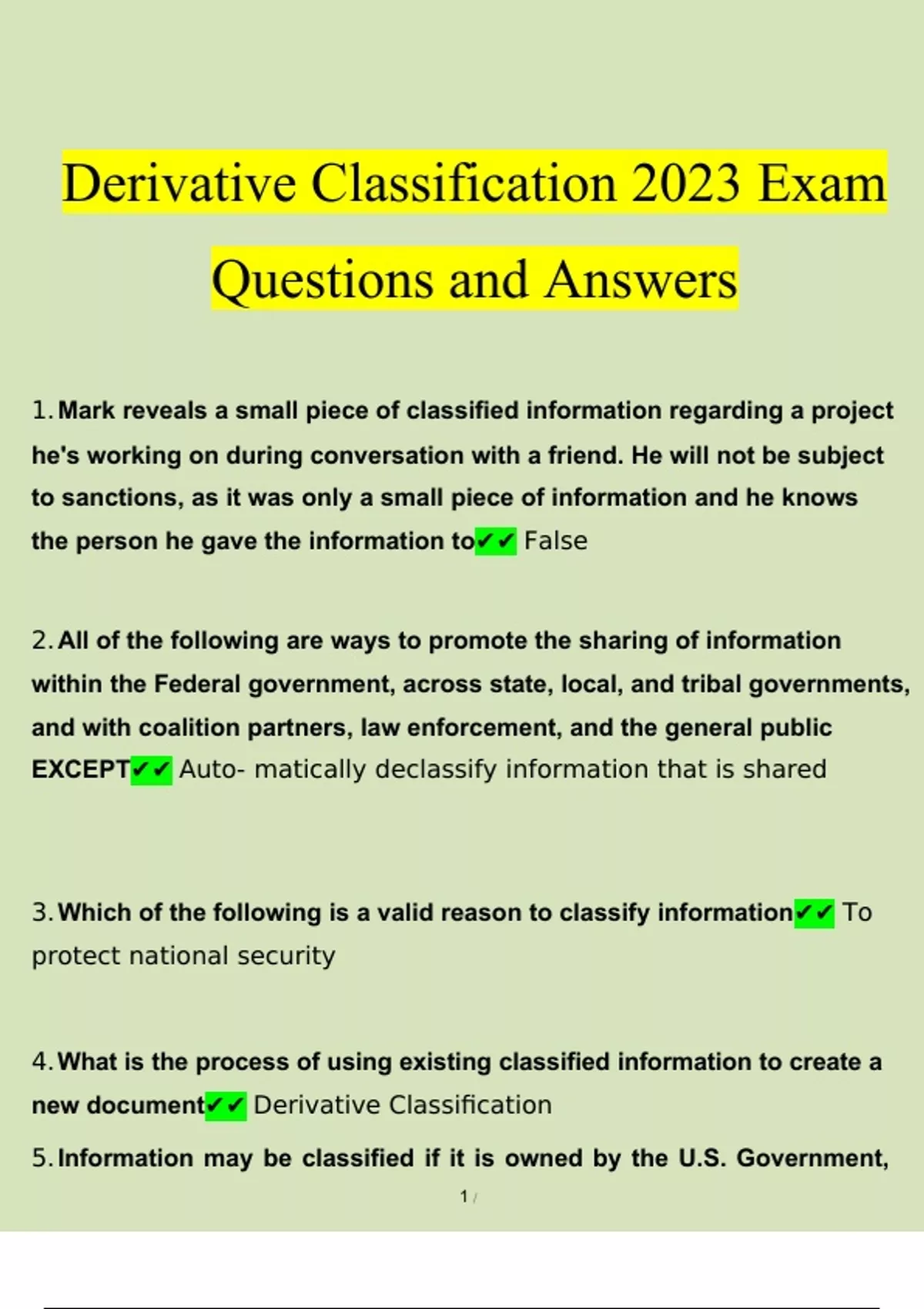
In the realm of government and corporate security, derivative classification exams stand as pivotal assessments for ensuring the proper handling of sensitive information. These exams are designed to evaluate an individual’s understanding of classification principles, ensuring that classified materials are appropriately protected and disseminated. As individuals seek resources to aid in their exam preparation, a variety of products and services emerge, each offering distinct features and benefits. In this comparative analysis, we delve into the landscape of derivative classification exam answers, examining key offerings, strengths, and limitations to assist consumers in making informed decisions.
Table of Contents
ToggleUnderstanding Derivative Classification Exams
Before delving into specific products and services, it is essential to grasp the significance of derivative classification exams. These assessments are commonly administered to employees and contractors who handle classified information, aiming to assess their comprehension of classification guidelines and regulations.
Derivative classification involves the creation of new classified material based on existing classified sources. It requires individuals to apply proper classification markings, handling procedures, and safeguarding measures to ensure the protection of sensitive information. As such, proficiency in derivative classification is critical for maintaining national security and safeguarding proprietary data.
Comparative Overview of Products and Services
1. Online Training Courses
Online training courses serve as popular resources for individuals seeking to prepare for derivative classification exams. These courses typically offer comprehensive coverage of classification principles, supplemented with practice questions and interactive modules. Platforms such as Udemy, Coursera, and LinkedIn Learning host a variety of courses tailored to government and corporate classification standards.
Pros:
- Flexibility: Users can access course materials at their convenience, facilitating self-paced learning.
- Interactive Learning: Many courses incorporate multimedia elements and quizzes to enhance engagement and retention.
- Accessibility: Online courses are accessible from any internet-enabled device, making them convenient for busy professionals.
Cons:
- Cost: While some courses may offer free options, premium courses often require payment, which may be a barrier for budget-conscious individuals.
- Quality Disparities: The quality of online courses can vary significantly, with some offerings lacking depth or accuracy in content coverage.
- Limited Interaction: Online courses may lack the personalized guidance and feedback available in traditional classroom settings.
2. Study Guides and Textbooks
Printed study guides and textbooks remain stalwart resources for exam preparation in various fields, including derivative classification. Publications such as “Classified Information Nondisclosure Agreement (SF-312) Study Guide” and “Derivative Classification Training” offer comprehensive coverage of classification principles, supplemented with sample questions and case studies.
Pros:
- Comprehensive Content: Study guides and textbooks often provide in-depth coverage of classification principles and regulatory requirements.
- Portability: Printed materials can be easily transported and referenced offline, allowing users to study anytime, anywhere.
- Reusability: Users can retain study guides for future reference or share them with colleagues, maximizing their utility over time.
Cons:
- Outdated Information: Printed materials may become outdated as classification standards and regulations evolve, necessitating frequent updates or supplements.
- Limited Interactivity: Unlike online resources, study guides and textbooks lack interactive elements such as quizzes and multimedia content, potentially hindering engagement and retention.
- Cost: The upfront cost of purchasing study guides and textbooks may be prohibitive for some individuals, particularly if multiple resources are required.
3. Practice Exams and Question Banks
Practice exams and question banks serve as invaluable tools for assessing readiness and identifying areas for improvement. Websites such as Quizlet, Exam Edge, and Study.com offer extensive repositories of practice questions tailored to derivative classification exams, allowing users to simulate exam conditions and gauge their proficiency.
Pros:
- Targeted Preparation: Practice exams enable users to familiarize themselves with the format and structure of derivative classification exams, reducing test anxiety and enhancing performance.
- Immediate Feedback: Many platforms provide instant feedback on practice questions, allowing users to identify and address knowledge gaps in real-time.
- Customization: Users can tailor practice sessions to focus on specific topics or areas of weakness, optimizing their study efforts for maximum effectiveness.
Cons:
- Limited Context: Practice exams may lack the contextual depth provided by comprehensive study materials, potentially limiting users’ understanding of classification principles and regulations.
- Reliability Concerns: The accuracy and relevance of practice questions may vary across different platforms, necessitating caution and discernment when selecting resources.
- Overreliance: Excessive reliance on practice exams without supplementing with comprehensive study materials may lead to shallow understanding and poor retention of key concepts.
Conclusion
In the realm of derivative classification exam preparation, consumers are confronted with a plethora of products and services, each offering unique features and benefits. Online training courses, study guides and textbooks, and practice exams and question banks represent popular resources for individuals seeking to enhance their proficiency in classification principles and regulations.
Ultimately, the ideal approach to derivative classification exam preparation may vary depending on individual learning preferences, budgetary constraints, and time constraints. While online training courses offer flexibility and interactivity, printed study guides and textbooks provide comprehensive coverage and portability. Practice exams and question banks, meanwhile, facilitate targeted preparation and immediate feedback.
In navigating this diverse landscape of products and services, consumers are encouraged to evaluate their individual needs and preferences carefully. By leveraging a combination of resources tailored to their unique learning styles, individuals can enhance their proficiency in derivative classification and contribute to the protection of sensitive information in both government and corporate settings.
