
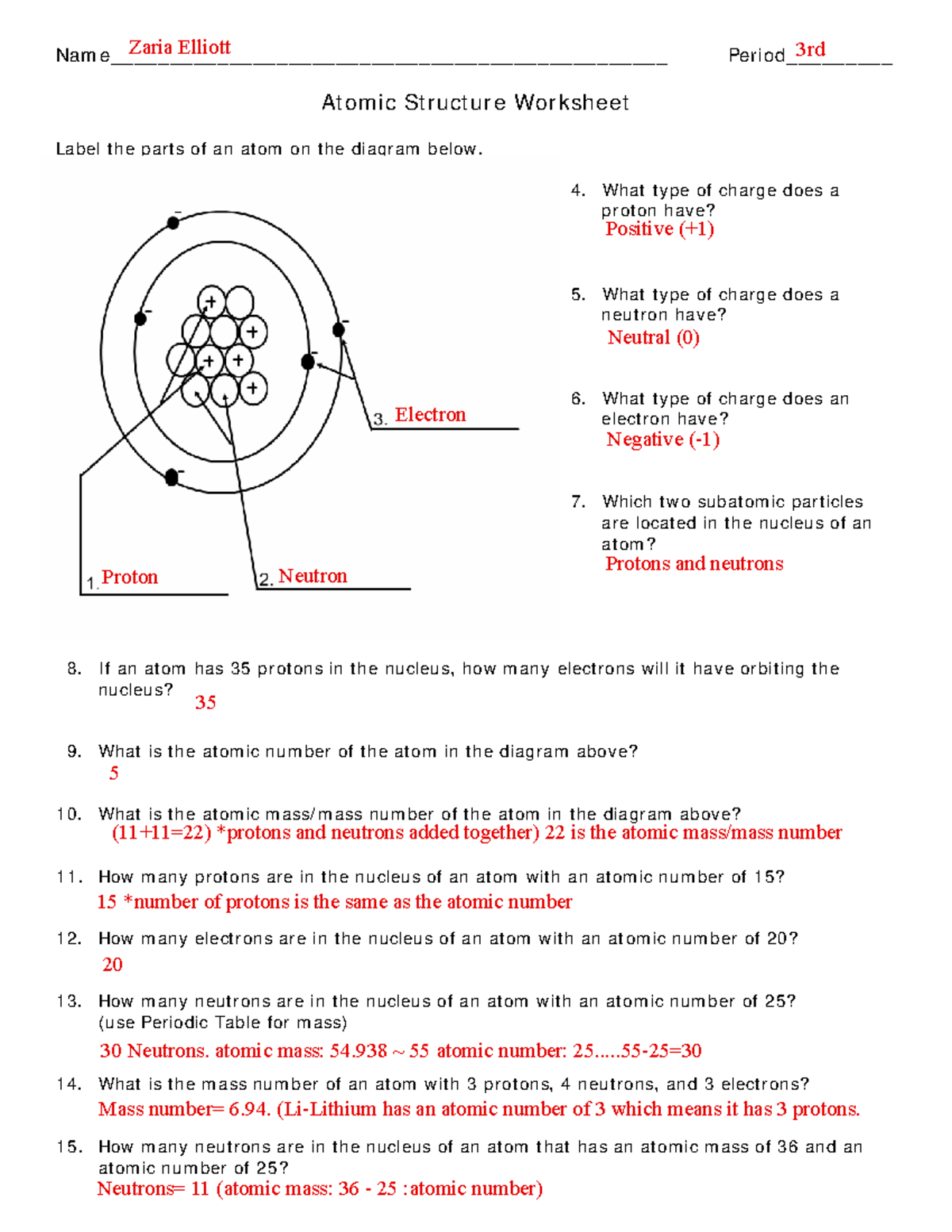
Understanding atomic structure is fundamental to grasping the intricacies of chemistry and physics. To aid in this understanding, various products and services offer worksheets designed to elucidate the mysteries of atomic structure. In this article, we’ll compare and contrast different offerings in this domain, providing insights for consumers seeking effective resources.
- Chemistry Textbooks: Traditional chemistry textbooks often contain sections dedicated to atomic structure, accompanied by exercises and answers. These resources offer comprehensive coverage of the topic and are typically aligned with standard curriculum guidelines. They provide a structured approach to learning, making them suitable for students in academic settings.However, some textbooks may lack interactivity and engagement, leading to disinterest among students. Additionally, the cost of textbooks can be prohibitive for some learners, limiting accessibility.
- Online Worksheets and Answer Keys: Numerous websites and online platforms offer atomic structure worksheets along with answer keys. These resources are readily accessible and often free of charge, making them ideal for students seeking additional practice outside the classroom.Online worksheets also frequently incorporate interactive elements such as quizzes and animations, enhancing engagement and understanding. However, the quality and accuracy of answers may vary across different websites, requiring users to exercise discernment in selecting reliable sources.
- Educational Apps: With the proliferation of mobile devices, educational apps have emerged as convenient tools for learning atomic structure and other scientific concepts. Many apps feature interactive tutorials, quizzes, and progress tracking functionalities, catering to diverse learning styles.Educational apps offer flexibility and convenience, allowing users to study anytime, anywhere. Some apps even employ gamification techniques to make learning more enjoyable and immersive. Nonetheless, the effectiveness of educational apps depends on factors such as content quality, user interface design, and technical reliability.
- Tutoring Services: For individuals seeking personalized guidance and support, tutoring services provide tailored instruction on atomic structure and related topics. Experienced tutors can offer explanations, practice problems, and feedback customized to the student’s proficiency level and learning pace.Tutoring services offer a high level of individualized attention, enabling students to address specific challenges and clarify concepts effectively. However, the cost of tutoring can be considerable, making it a less viable option for some learners.
Comparative Analysis:
- Content Quality: Chemistry textbooks typically offer comprehensive coverage of atomic structure concepts, while online worksheets and apps vary in quality depending on the source. Tutoring services often provide high-quality instruction but at a higher cost.
- Accessibility and Convenience: Online worksheets and educational apps are highly accessible and convenient, allowing users to study at their own pace and schedule. Textbooks and tutoring services may be less accessible due to cost or logistical constraints.
- Interactivity and Engagement: Educational apps and some online worksheets feature interactive elements that enhance engagement and retention. Textbooks and tutoring services may offer less interactivity but provide opportunities for personalized interaction with instructors.
- Cost: Online worksheets and apps are often free or available at a nominal cost, making them accessible to a wide audience. Textbooks and tutoring services can be expensive, limiting access for some individuals.
- Customization and Personalization: Tutoring services excel in providing personalized instruction tailored to the individual student’s needs and learning style. Educational apps may offer some degree of customization, while textbooks provide a standardized approach to learning.
Conclusion:
In the realm of atomic structure education, consumers are presented with a variety of products and services catering to diverse learning preferences and needs. Chemistry textbooks offer comprehensive coverage but may lack interactivity, while online worksheets and apps provide accessibility and engagement at a lower cost. Tutoring services offer personalized instruction but may be less accessible due to cost considerations.
Ultimately, the choice of resource depends on factors such as budget, learning style, and individual preferences. Combining multiple resources, such as using textbooks for foundational knowledge and supplementing with online worksheets or tutoring for targeted assistance, can optimize the learning experience. By evaluating the strengths and limitations of each option, consumers can make informed decisions to enhance their understanding of atomic structure and related concepts.
